
If you've seen the term "shrink wrap treatment" trending lately, you're not imagining it. The New York Post and NewBeauty have both covered the phenomenon, and patients are now walking into consultations asking for it by name.
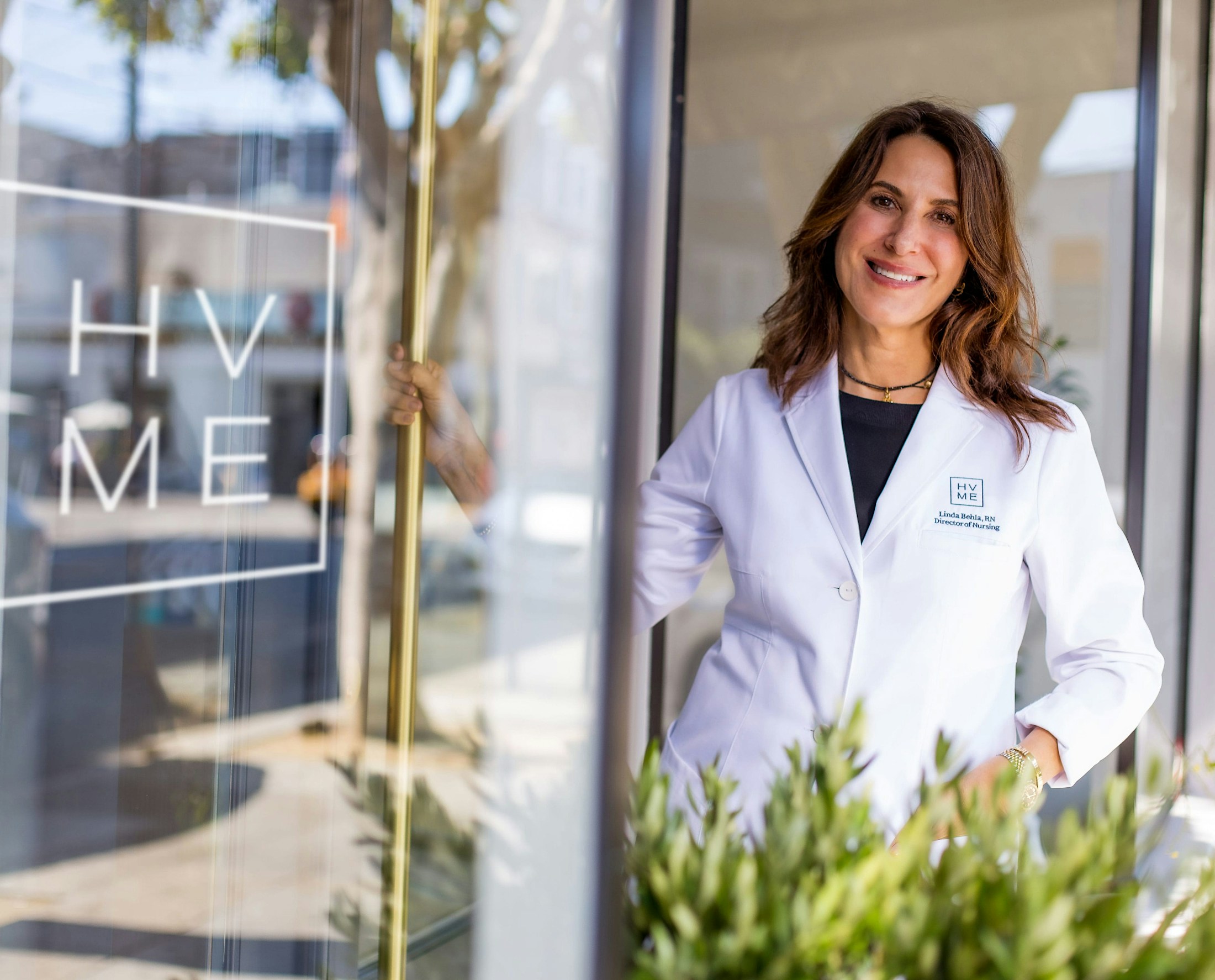
Founded in 2014, Hayes Valley Medical Esthetics has built a reputation in San Francisco around exactly this kind of question: separating real, evidence-based technology from social media buzz. Linda Behla, RN, who brings more than 20 years of clinical skincare experience to the practice, leads a team that works under the medical supervision of board-certified plastic surgeon Yngvar A. Hvistendahl, MD, and offers I-LASER 1940nm, the device behind the "shrink wrap" nickname, across our Hayes Valley, Cow Hollow, and Larkspur locations.
With more than 30 aesthetic devices in our toolkit and a ranking among the top 0.5% of medical aesthetics practices nationwide from Allergan Aesthetics, our providers are uniquely positioned to tell you what this trend actually delivers and who it's right for before you ever book.
What Is the "Shrink Wrap" Treatment?
The "shrink wrap" treatment is not a medical term or a brand name. It is consumer shorthand for the visible skin-tightening effect created when subdermal laser energy causes tissue to contract.
According to NewBeauty's reporting, the phrase took off after Lauren Goodman, founder of Beverly Hills' Juliana Clinics, described the iLaser device as a "shrink-wrap wonder."
Board-certified dermatologists interviewed for that piece were quick to clarify what is actually happening beneath the skin; the catchy nickname describes the result, not the mechanism. One dermatologist noted that the device delivers controlled thermal energy through a thin laser fiber placed beneath the skin, which liquefies small amounts of fat while triggering both immediate and long-term collagen contraction.
Why Is Everyone Talking About "Shrink Wrapping"?
Skin-tightening treatments have surged in popularity alongside the rise of GLP-1 medications. As patients lose weight quickly, skin often cannot keep pace with the underlying volume changes, leading to a looseness commonly nicknamed "Ozempic face." That timing has made this conversation louder than it might otherwise be.
People searching for this treatment tend to fall into a few overlapping groups:
-
Patients experiencing facial hollowing or jawline laxity after significant weight loss
-
People curious about non-surgical facelift alternatives and who are not ready for a surgical procedure
-
Patients with small, stubborn fat pockets in areas like the chin, abdomen, or above the knees
-
Anyone who has read about "Ozempic face" and wants a proactive solution
The New York Post reported that an increasing number of aesthetic patients are turning to a device called the iLaser, which practitioners say "shrink wraps" the skin without surgery. That same coverage noted that demand has been particularly strong among patients managing the skin laxity that can follow rapid, medication-assisted weight loss.
The Technology Behind "Shrink Wrap": I-LASER 1940nm
I-LASER 1940nm is the FDA-cleared diode laser at the center of this trend, and it is not a single, one-size-fits-all treatment. Its 1940nm wavelength is selectively absorbed by water and fat, allowing the device to deliver controlled thermal energy beneath the skin's surface through an ultra-thin fiber rather than through the epidermis.
That subdermal delivery is what sets this category apart from older, surface-level tightening tools: because the laser bypasses the outer skin layer entirely, it can reach temperatures that produce more effective tissue contraction, collagen remodeling, and targeted fat disruption without the same limitations on safety or efficacy.
A dermatologist interviewed by NewBeauty described the result as fat melting, skin tightening, or both, depending on how the treatment is configured for each patient. That configurability is built into the device's three clinical programs, each addressing a distinct concern.
I-LIFT
I-LIFT is designed to tighten and reposition lax tissue for non-surgical facelift-style results. Common treatment areas include:
-
Lower face and jawline
-
Neck
-
Arms
-
Abdomen
-
Knees and inner thighs
I-CELL
I-CELL targets the fibrous bands responsible for cellulite dimpling and is also used to remodel scars. By selectively releasing those structures, the skin surface becomes smoother and more uniform with minimal disruption to surrounding tissue.
It is commonly used for:
-
Cellulite reduction
-
Post-surgical or traumatic scar remodeling
-
Surface texture irregularities
I-MELT
I-MELT focuses on targeted fat reduction through laser-assisted lipolysis. It is best suited for areas where contour refinement and skin tightening are both priorities, allowing providers to address unwanted fullness and improve the quality of overlying skin in a single program.
Typical treatment areas include:
-
Submental fullness and double chin
-
Abdomen and flanks
-
Arms and bra line
-
Small facial fat pockets
Is "Shrink Wrap" the Same as a Surgical Facelift?
No. While the marketing language can make I-LASER 1940nm sound like a surgery replacement, dermatologists are careful to draw that line. One dermatologist interviewed for the NewBeauty piece emphasized that this treatment category is not a substitute for surgical skin removal in patients with significant laxity, and that proper patient selection matters as much as the technology itself.
For patients with more advanced skin laxity or who need significant volume removal, a traditional facelift or liposuction may still be the more appropriate option. I-LASER 1940nm is best positioned as a bridge between fully non-invasive treatments and surgery, not a one-to-one replacement for either end of that spectrum.
Is the "Shrink Wrap" Treatment For You? Find Out With Hayes Valley Medical Esthetics
The "shrink wrap" trend may have started with a catchy nickname, but the technology behind it is grounded in real, FDA-cleared science.
At Hayes Valley Medical Esthetics, Linda Behla, RN, leads a highly trained team delivering I-LASER 1940nm under the medical supervision of board-certified plastic surgeon Yngvar A. Hvistendahl, MD. With more than 20 years of medical and skincare experience guiding our approach, our providers focus on precise, individualized planning rather than chasing a trend.
I-LASER 1940nm tends to be a strong fit for patients who are:
-
Experiencing mild to moderate skin laxity on the face or body
-
Dealing with small to moderate areas of unwanted fat in targeted zones like the jawline, submental region, or abdomen
-
Managing skin looseness following rapid weight loss, including GLP-1-related changes
-
Noticing cellulite or surface texture irregularities, they want them addressed without surgery
-
Looking for a non-surgical facelift alternative without the downtime or commitment of a traditional procedure
Candidacy is always confirmed during a one-on-one consultation, where a Hayes Valley Medical Esthetics provider reviews your anatomy, expectations, and medical history before recommending a treatment plan. Schedule a consultation with our San Francisco team today.
Disclaimer: This content is provided for educational purposes only and does not constitute medical advice. It does not replace a personalized consultation with a qualified medical provider. Individual outcomes, candidacy, risks, and results vary from patient to patient. I-LASER 1940nm treatments at Hayes Valley Medical Esthetics are performed under the medical supervision of Yngvar A. Hvistendahl, MD.